Class B CDL Training in Nashville: What It Is and Who It’s For
Not every commercial driving job involves a tractor-trailer. Across Middle Tennessee, drivers haul gravel in dump trucks, deliver furniture in box trucks, and run local routes in straight trucks. Each of those jobs requires a Class B Commercial Driver’s License (CDL).
Tennessee CDL School, part of CDL School Inc., trains Class B drivers at its campus in Madison, about 23 minutes north of downtown Nashville. This guide covers what a Class B CDL allows, how it compares to a Class A, and what training looks like from start to finish.
What is a Class B CDL?
A Class B CDL allows a driver to operate a single vehicle with a gross vehicle weight rating (GVWR) of 26,001 pounds or more. A single vehicle means the cab and cargo area sit on one frame. The driver is not hauling a separate semi-trailer.
Common Class B vehicles include:
- Box trucks and straight trucks
- Dump trucks
- Local delivery trucks
- Garbage and recycling trucks
- Tow trucks
What Jobs Use a Class B CDL?
Most Class B jobs are local. Many drivers start and end each shift at the same yard, so they sleep in their own beds most nights. Home time is one of the main reasons drivers choose Class B over long-haul trucking.
Common Class B jobs include:
- Local delivery for stores and distributors
- Construction hauling with dump trucks
- Waste and recycling collection
- Moving and furniture delivery
- Towing and roadside service
Tennessee CDL School’s career support team helps Class B graduates the same way it helps Class A graduates. The team connects students with companies that are hiring, often before training ends.
How Class B Compares to Class A
The biggest difference is the trailer. A Class A CDL covers combination vehicles, such as a tractor pulling a semi-trailer. A Class B CDL covers single heavy trucks.
| Class B | Class A | |
|---|---|---|
| Vehicles | Single trucks over 26,000 lbs | Tractor-trailers and other combination vehicles |
| Training length | 90 hours | 3 weeks (weekday) or 5 weekends |
| Tuition | $2,925 | $4,300 cash or $5,200 financed |
| Campus | Nashville only | Nashville and Jacksonville |
| Typical routes | Mostly local | Local, regional, and long-haul |
A Class A license also covers most Class B trucks, so Class A drivers can choose from more vehicles. Class B training is shorter and costs less, which makes it a practical fit for drivers who already know they want local work.
For a full breakdown of Class A, B, and C licenses, see Understanding the Different CDL Classes. Class B training is offered in Nashville only, so students in the Jacksonville area can train for a Class A CDL at Florida Truck Driving School.
What Happens During Class B Training
The Class B program runs 90 total hours and moves through three stages.
Classroom Instruction
Students start with general knowledge, air brakes, and Entry-Level Driver Training (ELDT) theory. ELDT is the federal training standard every new CDL driver must complete before taking the skills test.
Yard Training
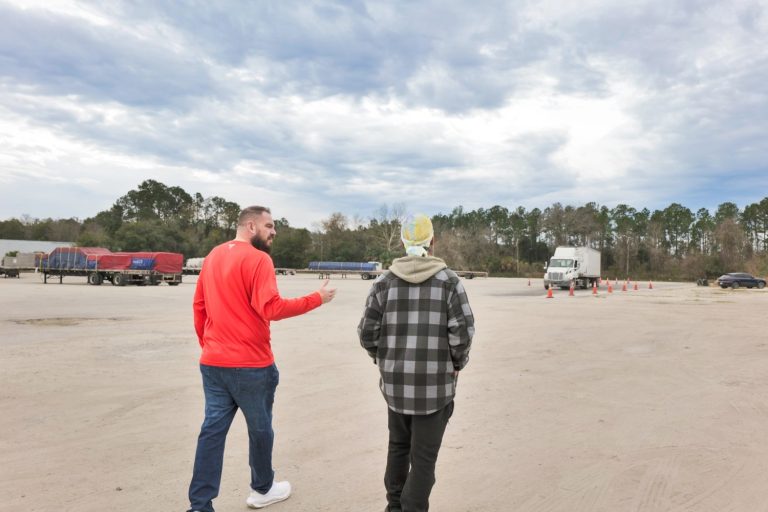
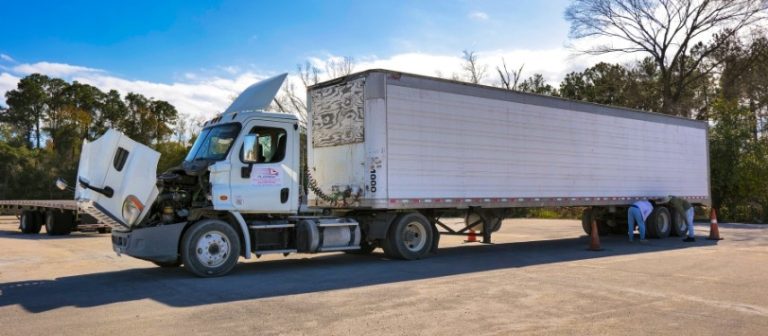
Next, students practice backing and maneuvering in a controlled space. They also learn the pre-trip inspection, which drivers complete before every trip to check brakes, lights, tires, and other safety parts.
Road Training
Students then drive on public roads in city, highway, and rural settings. Training near Nashville gives them time in heavy traffic, on interstates, and on two-lane back roads.
Training Schedule
New Class B classes start every Saturday, so students do not wait long for an open seat. Classroom sessions run Saturday through Thursday. Field and road training runs Friday through Monday, from 7:00 AM to 6:00 PM.
How to Enroll and Pay for Class B Training
Class B students must meet the same basic requirements as Class A students:
- Be at least 18 years old
- Hold a valid driver’s license
- Show proof of Tennessee residency
- Pass a DOT physical exam
- Have a clean driving record
Class B tuition is $2,925. Payment options include monthly payment plans, company-sponsored training, Tennessee workforce programs, and personal loans. The Paying for School page explains each option, and the Get Started page walks through each enrollment step.
Students ready to begin can call Tennessee CDL School at (615) 492-1898 or reach out through the contact page. The admissions team can confirm the next Saturday start date and help choose a payment option.
Class B CDL FAQs
Can a Class B driver pull a trailer?
Yes, but only a small one. A Class B license allows a driver to tow a trailer that weighs 10,000 pounds or less.
Can a Class B CDL holder drive a school bus or city bus?
Not without extra endorsements. Bus drivers need a passenger (P) endorsement, and school bus drivers also need a school bus (S) endorsement.
Can a Class B CDL be used outside Tennessee?
Yes. A Tennessee CDL is valid in every state, but drivers under 21 can only drive commercial vehicles within Tennessee.
Is Tennessee CDL School approved to teach Class B?
Yes. The school is licensed by the State of Tennessee and meets federal ELDT standards.
Can a Class B driver upgrade to a Class A later?
Yes. Federal ELDT rules require Class B drivers to complete Class A upgrade training before taking the Class A skills test.
What should students wear to Class B training?
Students should wear closed-toe shoes or work boots, long pants, and a comfortable shirt. Sandals, shorts, and loose jewelry should be left at home.